



Ambidexterity: Rare Skill or Learned Trait?
Ambidexterity, the trait of having no dominant hand, has lasting effects on neurological distribution—yet this ability can be learned, to an extent.
Reading Time: 3 minutes
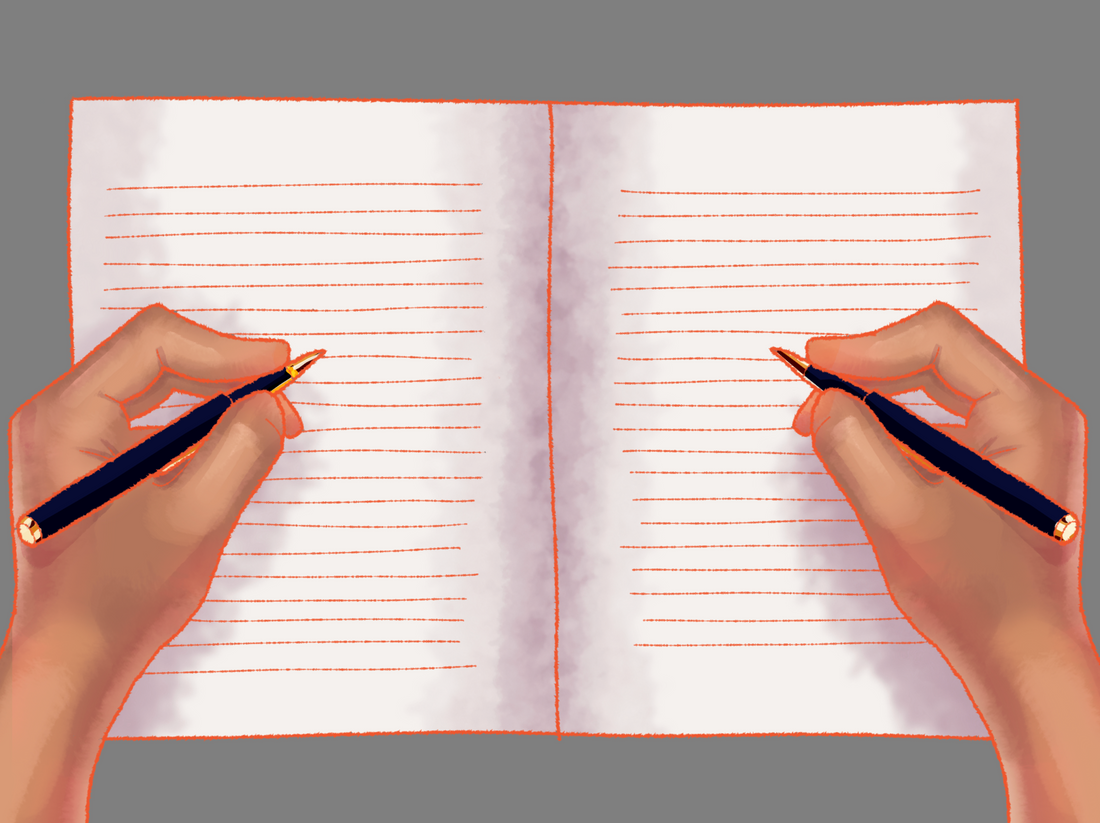
The existence of a dominant hand in most humans is an astonishing attribute, and it separates us from the majority of animals. This skill results from our highly specialized opposable thumbs and separation of digits, allowing us to complete most daily chores with one hand and to specialize the dominant hand to become more and more efficient. Moreover, unlike other mammals, around 90 percent of humans have a dominant right hand, which shows that the dominant hand is influenced heavily by environmental factors. Studies have shown that 25 percent of handedness comes from genetics, while the other 75 percent comes from the environment (the direction in which one’s language is written or cultural pressure to be right-handed). Arguably more interesting than individual hand dominance is the rare ability for humans to be ambidextrous, having no dominant hand.
While around one percent of humans are born ambidextrous, many people can become ambidextrous through training later in life. Similar to how right-handed people have a greater concentration of motor neurons in the left side of their brain, ambidextrous people have an equal balance of these neurons in both sides of the brain. The brain’s natural malleability, or neuroplasticity, allows people to alter this imbalance by strengthening their neural connections on the other side of the brain. Since the brain can form new connections only to a certain extent, a naturally right or left-handed person cannot become fully ambidextrous, but can become “mixed-handed,” not having a preference to either hand in certain activities. Interestingly, all of this is true not only with hands, but also with other symmetrical body parts such as feet and muscles—other body parts have a similar mapping in the brain, with one side of the brain controlling the opposite side of the body.
Some people are forced to become mixed-handed because of a temporary physical disability in their dominant arm that requires them to adapt with their non-dominant one. Injuries such as a broken arm, broken wrist, or twisted wrist often force the temporary use of the non-dominant hand, which leads to permanent mixed-handedness if kept up for long enough. This is the most common way people become mixed-handed, but it is possible to do the same without the disability of the dominant arm.
If practiced for a sufficient period of time, one can achieve mixed-handedness, which appears outwardly as ambidexterity, through a variety of tasks, developing strength and hand-eye coordination in your non-dominant hand. Some efficient exercises that work towards these goals are throwing and catching a ball, eating, brushing your teeth, typing, and many other simple daily tasks—any extra workload on the brain strengthens neural connections. Almost anyone can work toward mixed-handedness with an investment of time and some temporary annoyance, but in the end, you can write just as well with both hands. In addition to serving as a fun party trick, these skills can be used to improve efficiency, such as in typing and multitasking.
Aside from these simple advantages of having two equally skilled hands, the most common use for mixed-handedness is with athletes. In baseball, pitchers employ mixed-handedness to be unpredictable. The most famous example of this is Yankees pitcher Pat Venditte, who can throw curveballs with his right arm and sidearms with his left. This variety of pitches allowed him to adapt his pitch to the batter he was up against. Subsequently, Major League Baseball created a rule to stop him from switching arms during a pitch because it resulted in too many “mind games,” delaying the actual game. Another example is in music, where pianists and percussionists need to coordinate both hands very effectively; more control over the non-dominant hand makes this easier.
On the other hand, for the average person, mixed-handedness may not be the most useful skill. There are often some negative side effects, the most notable being the decrease in finesse of your previously dominant hand, since it is used half of the time instead of almost always. Luckily, mixed-handedness has no significant negative effects on the rest of the body. This is contrary to natural ambidexterity, however, which has been shown to correlate with overall poorer intellectual ability and cognitive decline with age. The symmetric lateralization of the brain spreads out the brain’s energy use, and the lack of specialization on one side of the body leads to decreased overall functionality when the energy is limited.
Mixed-handedness is a form of ambidexterity that can be developed from various environmental factors or willpower. It can aid athletes in many sports, but it isn’t the most useful for the average person aside from being a fascinating skill. Distinct from innate ambidexterity, which correlates with cognitive decline over time, the development of mixed-handedness doesn’t have nearly as many long-term effects on the brain and can only reduce your expertise with each hand individually.