



Memes and Misinformation: Students React to New York City’s 2025 Mayoral Election
Students react to the recent New York City mayoral election.
Reading Time: 4 minutes
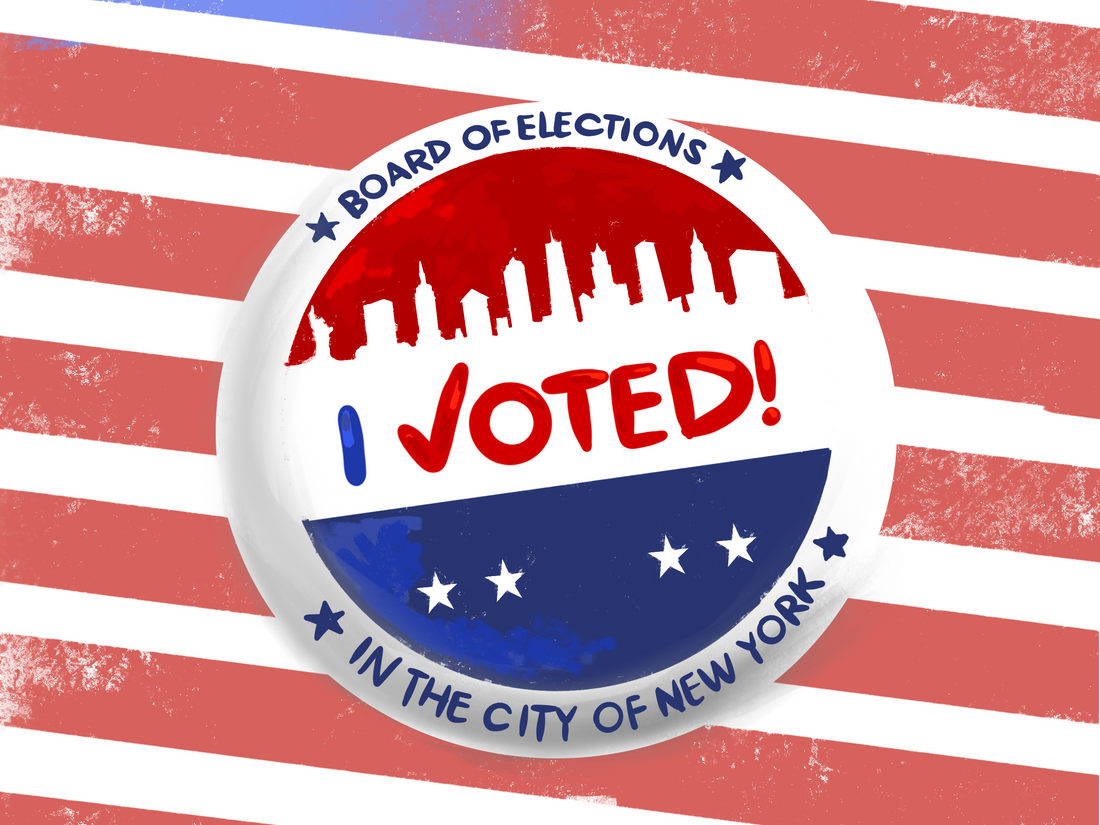
New York City’s mayoral race—and its accompanying Saturday Night Live (SNL) sketches, red beret photos, and heated debates—concluded in early November with a decisive victory for Democratic candidate Zohran Mamdani. Mamdani will be inaugurated into one of the most powerful and influential political roles in the nation on January 1, 2026, taking on responsibilities that will undoubtedly impact students’ lives and education. Stuyvesant’s student body represents a spectrum of opinions regarding the race and Mamdani’s historic win.
For many, Mamdani’s win in the general election seemed likely after his win in the primary last June. “The primary election shocked me. Going into that campaign, I wasn’t sure what the result was going to be. I was thinking the nominee would be Cuomo because of the wealth of New York City. And the rich people don’t really want to tax the rich,” sophomore Lila Sarva explained, citing Mamdani’s campaign promise to increase taxes on the city’s millionaires and billionaires to subsidize his affordability platform. “When Mamdani won the primary, it really put into perspective how many people were actually getting behind him and voting for him, so it made the ultimate results much less surprising,” Sarva reflected.
Students who were excited about the outcome of the mayoral race praised Mamdani for his morals, background, and politics. “I like how he emphasized affordability in every one of his interviews. He pulled through where Cuomo and Sliwa fell short in addressing actual crises in NYC, and he really put New Yorkers at the front,” sophomore Sasha Silakov commented.
However, other students were less thrilled, criticizing Mamdani for his views. Though Mamdani ran as the Democratic nominee, he is a Democratic socialist, and his policies reflect accessibility and taxing the wealthy to improve overall affordability for New Yorkers. “I don’t know why we’ve elected a Democratic socialist to one of the biggest cities in the country. We’ve seen how well that works out,” freshman Itay Franklin commented. Yet Franklin was not enthusiastic about Mamdani’s greatest opposition in the race, former governor Andrew Cuomo, either. “I don’t like what [Cuomo has] done, but Cuomo would’ve been the better pick. None [were] good, but he’s arguably the least bad,” Franklin said.
Aside from his politics, some criticized Mamdani for his lack of experience. “All the candidates sucked, honestly. And it seems that the city wanted to elect the least qualified one of them all,” sophomore Daniel Skarin commented. Skarin echoes broader criticisms of Mamdani, whose only prior elected office is his role as New York State assemblymember.
Regardless of political affiliation, one universal sentiment among students was respect and admiration for how cleverly Mamdani ran his campaign. From his appearances at nightclubs the weekend before the election to his charisma and collectedness on the debate stage, a key part of Mamdani’s campaign was his connection to New Yorkers. “I don’t agree with Mayor-elect Mamdani on certain issues, and I am unsure about the feasibility of some of his keystone plans in both the short and long term. However, I do believe Mamdani and his team ran a really smart and impressive campaign by focusing on affordability, housing, and transportation. The election results were a testament to that,” senior Amrit Das shared in an email interview.
Above all, students agree that Mamdani leveraged social media to reach a younger audience. While not every student was anxiously reading the New York Times or Wall Street Journal for election updates, many were eager to discuss the SNL skits on the election or sing an off-key version of the viral M-A-M-D-A-N-I song, a parody of Gwen Stefani’s “Hollaback Girl” that went viral following the first mayoral debate. The same students who said they did not follow politics spoke about the viral TikToks of Republican candidate Curtis Sliwa riding the subway or recited the number of times Sliwa got shot in the back of a taxi cab, another viral moment from the debate stage. In fact, Mamdani’s ability to utilize social media as a powerful platform may have been his true key to success. “Mamdani didn’t start with the biggest audience, especially compared to a former Governor of NY, yet he was able to grow his message to the city, and even beyond, mostly due to social media […] which, if really good or really bad, can make or break a candidate,” Das commented.
Das worked on the Stuyvesant Mock Election, in which Mamdani won 66 percent of the votes. To many, this outcome was not surprising. “Stuy is very multi-cultural, and Mamdani’s story of the immigrant experience (being an immigrant and of the racial/religious minority), and wanting a multi-cultural city resonated within our school. The youth vote really carried him to victory in the election, and our mock election showed that,” Das shared.
Though many students participated in the Mock Election, many still declined to speak about the election at all, citing how they felt uninformed or too scared to state their controversial opinions. When responding to questions, very few said anything other than, “I don’t know anything about politics” or “I don’t want to say.” Though it may be challenging to follow politics in a time of misinformation and overall polarization, it is necessary to be an informed student. Engaging and interacting with politics is always important, especially as high schoolers at Stuyvesant who will have the potential to make meaningful change in the coming years.
Though students’ reactions were divided, it is clear that the mayoral election left its mark on Stuyvesant. The results of the Mock Election reflected Mamdani’s decisive victory, though some are still vocal against his policies. Regardless, social media played an undeniable role in this election and got young people, including Stuyvesant students, more involved than ever.